Executive Summary
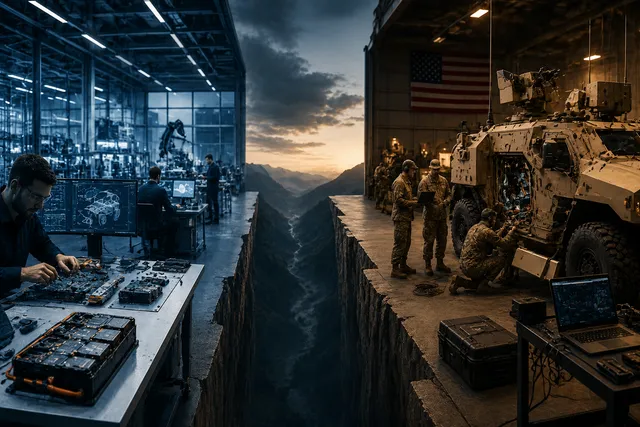
Commercial technology companies regularly misunderstand what defense acquisition actually requires. The gap is not primarily technical — it is organizational, procedural, and regulatory. This article examines the defense acquisition structure, what requirements documents look like, and how commercial capability organizations can build the foundation for successful defense market entry.
The Core Problem
Commercial companies frequently approach defense acquisition with a product-led mindset: "Here is what we built, and here is why the military should want it." Defense acquisition does not work this way. The acquisition process starts with a validated requirement — a documented gap in capability that a Program of Record or acquisition office has identified, prioritized, and funded. If there is no validated requirement, there is no purchase.
How Defense Acquisition Actually Works
The defense acquisition system flows through several parallel tracks depending on speed, dollar value, and risk tolerance. The primary frameworks are:
Major Defense Acquisition Programs (MDAPs)
MDAPs are large, multi-year programs governed by DoDI 5000.02. They move through formal milestones (A, B, C) with extensive documentation requirements. Commercial companies rarely enter here directly — they typically participate as subcontractors or technology licensees under a prime contractor.
Middle Tier Acquisition (MTA)
The MTA pathway was created under 10 USC 3458 to allow faster acquisition of mature technologies. It has two tracks: Rapid Prototyping (delivers a fielded capability within 5 years) and Rapid Fielding (fields proven systems within 6 years). MTA programs can be created by acquisition executives without the full MDAP oversight burden. This is where commercial technology companies with mature systems can accelerate entry.
Other Transaction Authority (OTA)
OTA agreements allow DoD components to enter agreements for prototype projects outside the Federal Acquisition Regulation (FAR). They are heavily used by Defense Innovation Unit (DIU), Army Futures Command (AFC), and various program offices. OTAs require a non-traditional defense contractor or significant commercial involvement in the consortium. For commercial companies, OTA is often the fastest route to DoD engagement.
What sam.gov Actually Tells You
SAM.gov is the authoritative source for federal contracting opportunities, but reading it effectively requires understanding the solicitation types. Key document types:
- Sources Sought (SS): The government is asking who can respond to a requirement. Responding positions you in the market but does not guarantee an award.
- Request for Information (RFI): The government is gathering market intelligence. RFI responses do not guarantee participation in a subsequent solicitation.
- Request for Proposal (RFP): The government is actively procuring. This is where commercial companies need to be registered in SAM, have the right NAICS codes, and understand the evaluation criteria.
The Readiness Gap
Most commercial technology companies approaching the defense market are not acquisition-ready. The specific gaps SOSRA observes most frequently include: no CAGE code or SAM.gov registration, no NAICS code alignment to defense service categories, no past performance record in the government sector, no understanding of CUI or FCI handling requirements, and no mechanism for receiving and responding to solicitations.
These are not technology gaps — they are organizational posture gaps. They can be addressed systematically with the right structure and support.
Recommendations
Commercial organizations seeking defense market entry should: register in SAM.gov immediately (it is free and prerequisite to everything), identify two to three relevant NAICS codes that match their capability, identify the program offices and commands that manage the requirement areas they address, attend industry days and market research events (these are public and often available via army.mil or afcea.org), and engage government small business advisors at target installations.
SOSRA's Role
SOSRA Defense helps commercial organizations understand the acquisition landscape, identify the right entry points, and build the organizational structure needed to participate. We do not fabricate introductions, imply privileged access, or guarantee contract awards. We provide the structure, the market intelligence, and the pathway analysis.